Begin with the tradition that interests you. Read its context before you choose a class or performance. The examples below cover different communities; they are starting points for exploration, not a ranking of cultures.
BRAZIL · RECÔNCAVO OF BAHIA
Samba de Roda
UNESCO describes Samba de Roda as a festive practice that combines music, dance, and poetry. It developed in Bahia's Recôncavo region, drawing on African traditions and elements of Portuguese culture. The specific place matters when you search for a performance or teacher.
Ask an organizer how the event connects to local practitioners. Listen to the introduction as carefully as the music.
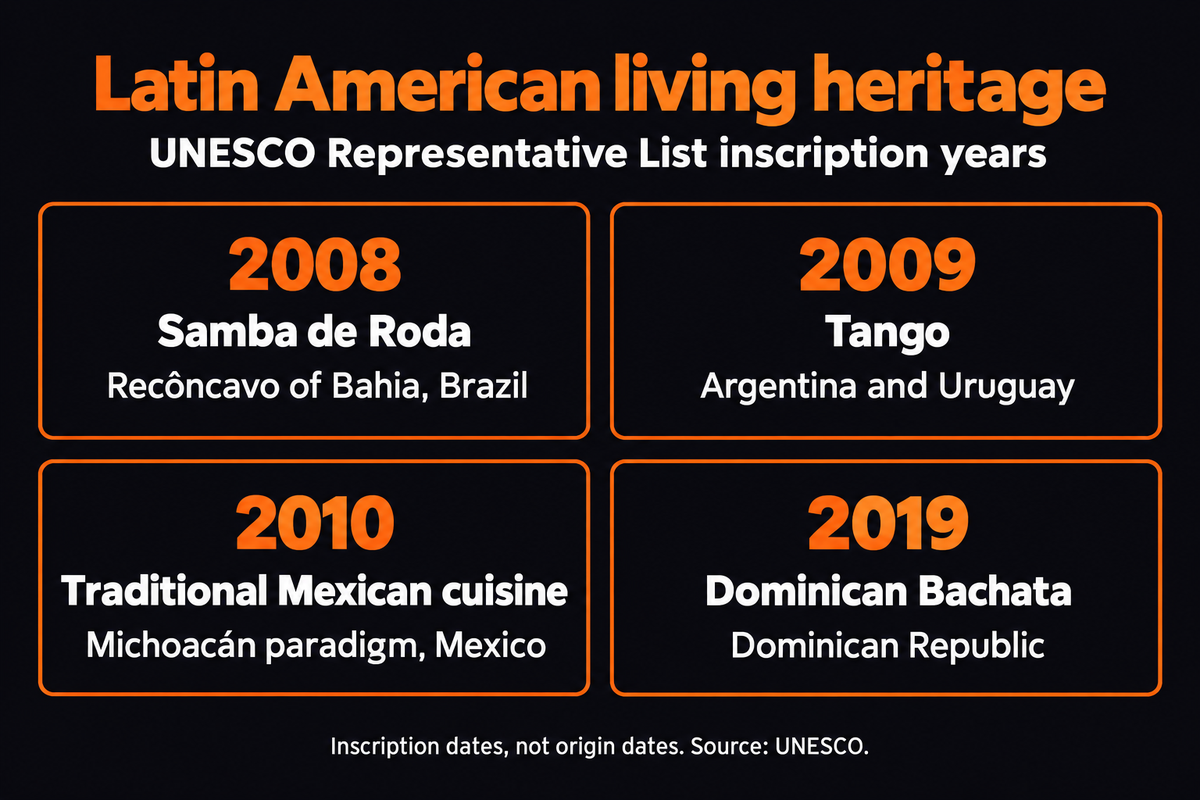
Source: UNESCO, Representative List entry, 2008; earlier proclamation, 2005.
ARGENTINA & URUGUAY
Tango across the Río de la Plata
UNESCO locates tango's development in the urban communities of Buenos Aires and Montevideo. Its entry covers music, dance, and poetry. It describes a community that includes musicians, dancers, composers, and teachers.
Before booking, ask whether an event is a seated performance, a lesson, or a social dance. Check the language of instruction and whether beginners can attend.
Source: UNESCO, Tango, Representative List entry, 2009.
MEXICO · MICHOACÁN PARADIGM
Food as community knowledge
UNESCO's traditional Mexican cuisine entry connects farming, preparation, rituals, and shared meals. It identifies corn, beans, and chili as foundations. The Michoacán example emphasizes the knowledge of cooks and other practitioners.
Use that context to choose a cooking activity. Ask who teaches it, which ingredients you will handle, and what you will learn about their preparation. Tell the host about dietary needs before paying.
Source: UNESCO, traditional Mexican cuisine, Representative List entry, 2010.
DOMINICAN REPUBLIC
Music and dance of Bachata
UNESCO describes Dominican Bachata as a musical expression that combines rhythmic bolero with other Afro-Antillean genres. Its account connects the music and dance to community gatherings. Traditional ensembles use guitars and percussion alongside bass.
For a first lesson, ask the teacher to explain the music as well as the movement. Confirm the level, duration, and partner arrangements.
Source: UNESCO, music and dance of Dominican Bachata, Representative List entry, 2019.